
An estimate can reach the crew with its planning assumptions still hidden.
I've worked in electrical estimating and electrical operations.
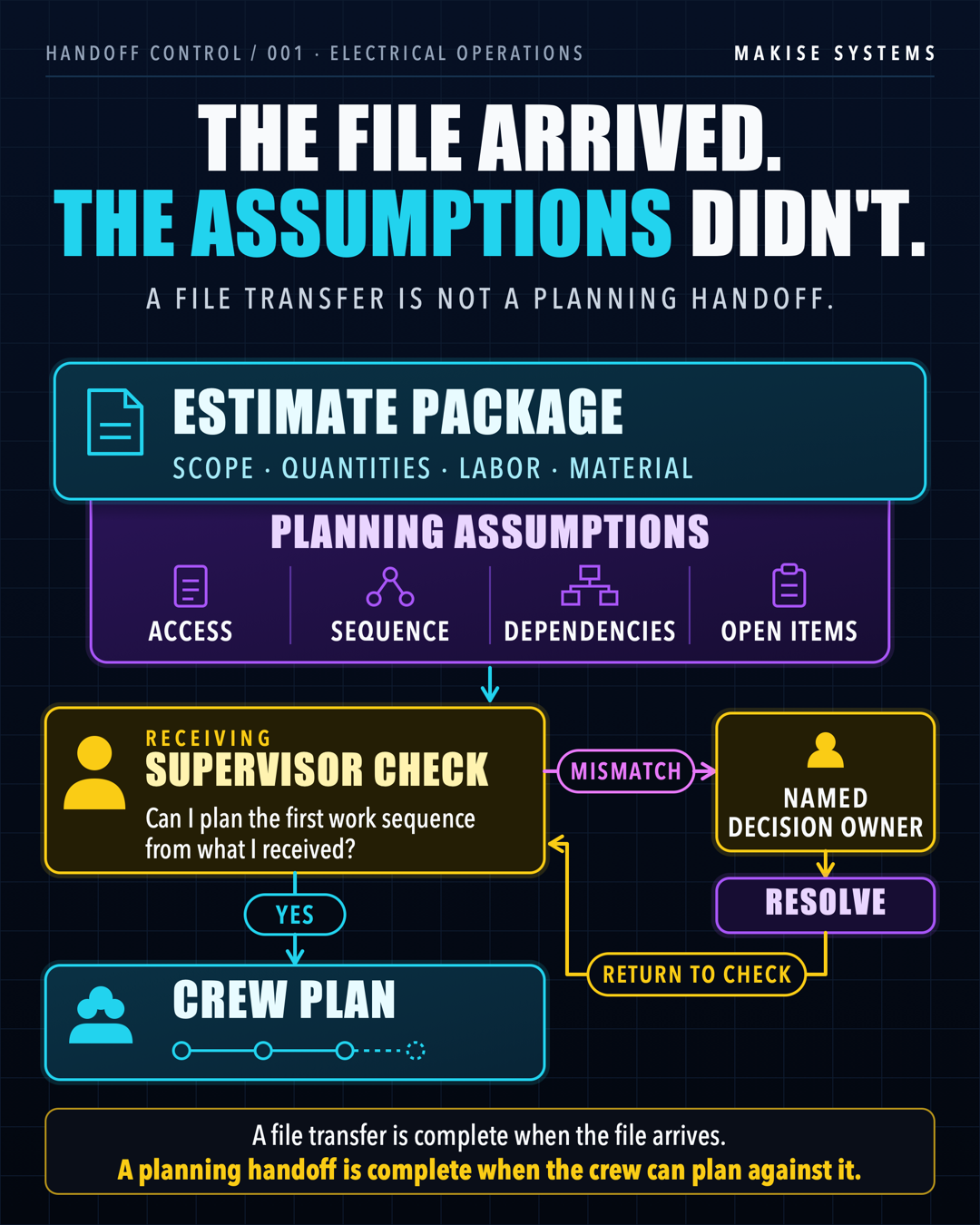
A file can carry scope, quantities, labor, and material without carrying the reasoning behind the labor plan.
Many estimates list clarifications and exclusions. The conditions behind the labor hours can stay with the estimator.
- Access.
- Sequence.
- Dependencies.
- Open items.
If those assumptions don't travel, the receiving supervisor has to reconstruct them under production pressure.
That's where crew planning can drift from what was priced.
A usable bid-to-field handoff should do four things:
- Pair the current estimate with the approved scope.
- Make the planning assumptions visible.
- Ask the receiving supervisor: can you plan the first work sequence from this?
- Route any mismatch to a named decision owner before the handoff closes.
This does not replace the drawings, specifications, or approved scope.
A file transfer is complete when the file arrives.
A planning handoff is complete when the crew can plan against it.